
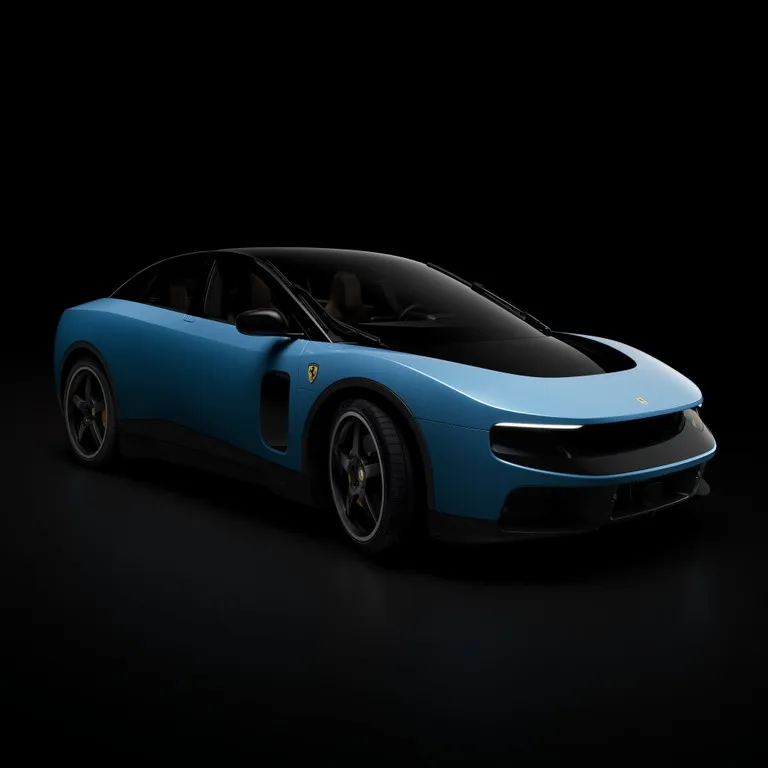
When Ferrari unveiled the Luce—four doors, five seats, over a thousand electric horsepower, and a design by Jony Ive and Marc Newson—people reacted exactly as you might expect: with outrage. But are we really sure that, in this case, this wasn't exactly the reaction Ferrari was looking for?
What the Ferrari Luce Really Is
The Luce is Ferrari’s first fully electric car: an engineering revolution equipped with four motors, a racing-grade battery, and hyper-tech interiors saturated with cutting-edge technology, all at a list price exceeding half a million euros.
The design was developed by the California-based studio LoveFrom, the firm founded by Jony Ive—for years the mastermind behind Apple’s aesthetic—and world-renowned industrial designer Marc Newson. It is an ambitious choice that traces its roots back to 2021, when Exor, the holding company that has owned Ferrari since 2016, announced a multi-year collaboration with LoveFrom.

Jony Ive’s firm, which boasts high-profile collaborations with the likes of Airbnb, Moncler, and OpenAI, has solid experience in customer experience and creativity applied to the luxury sector, but until now, it had never ventured into automotive design. The decision to rely on LoveFrom, therefore, as counterintuitive as it may seem, is rooted in the choice by Ferrari’s executive chairman, John Elkann, to completely rewrite the rules of the game, setting aside the Ferrari Centro Stile in favor of this American firm. It was a clean slate for a project that, in Elkann’s words, had to be “totally different, the result of a different mindset.”
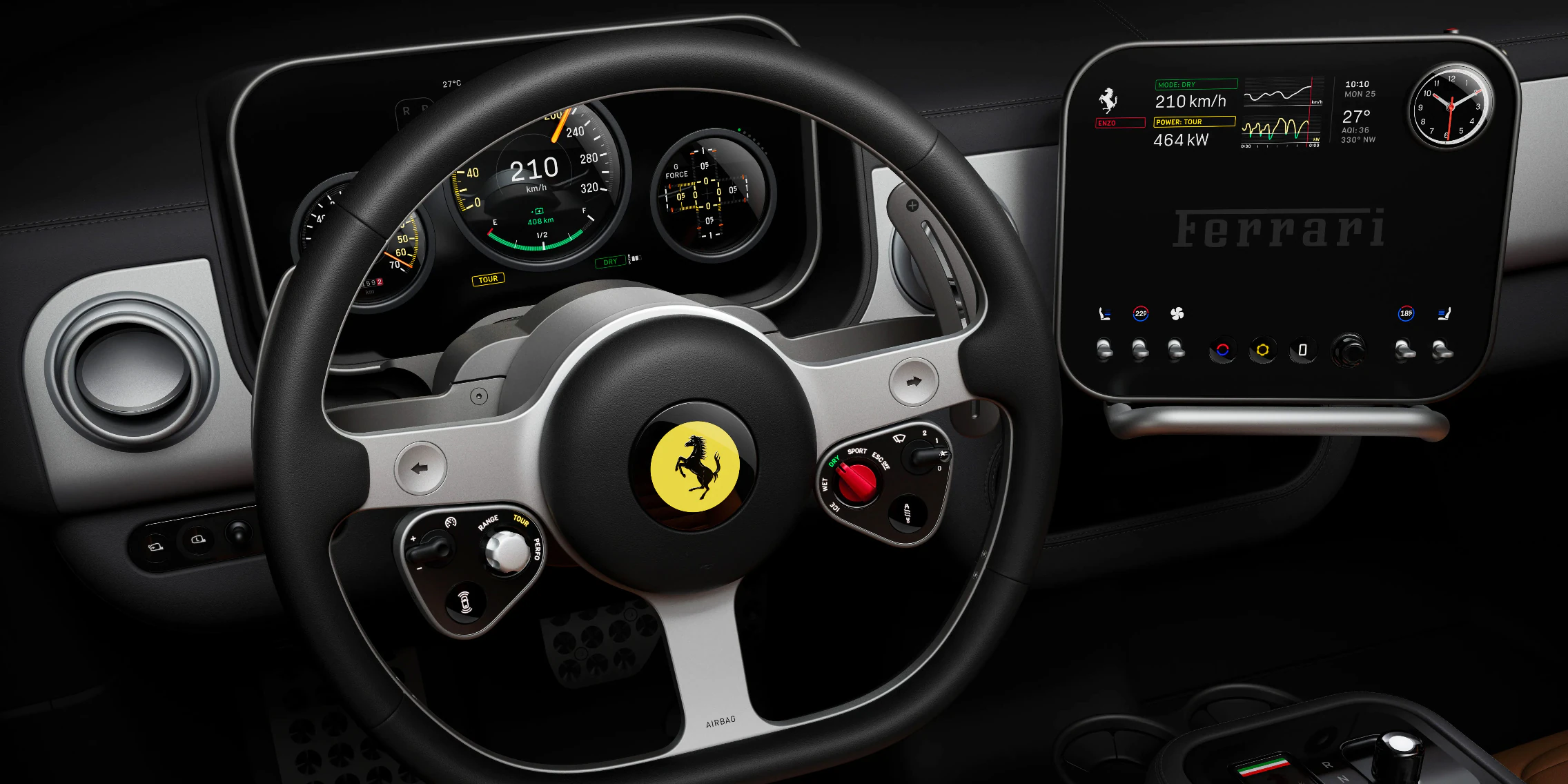
The problem—or the genius, depending on your perspective—is that the Luce looks like no Ferrari that came before it. The imprint of its Californian influence is evident, especially in the interior: the screen icons echo the design of the iPad, iPhone, and their operating system, while the exterior abandons the low, aggressive stance to make room for a design characterized by the smooth, curved surfaces typical of contemporary electric cars.
The public reveal of the Ferrari Luce has created a rift in the hearts of the brand’s enthusiasts. There is a clear divide between the desires of millions who felt their vision of a loud, two-seater, red Maranello hypercar had been betrayed, and a product that presents itself as a high-end utility vehicle that seems to have no myth left to tell. For those who have built part of their identity around the legend of Maranello, this is unbearable.
"It doesn't look like a Ferrari"
The most repeated phrase surrounding the Luce has been: it doesn’t look like a Ferrari. It is worth understanding what that really means.
The Prancing Horse logo is not just an automotive brand; it is one of the most exportable symbols of Italian identity: speed, engineering, exclusivity, Formula 1, and rarity. Even those who will never buy a Ferrari feel entitled to say what a Ferrari should be, because Ferrari has built part of its value precisely through widespread desire, including the desire of those who cannot afford one.
While it is true that commercially a brand belongs to the company, culturally speaking it also belongs to the collective imagination. Whenever Ferrari decides to take the Prancing Horse into uncharted territory, a segment of the public reacts as if the company has somehow meddled with something that was partly theirs. It is an understandable human reaction: a collective raised on the impossible dream of a free, affluent life does not want to envision itself driving a high-tech luxury runabout. They fear that, just as happened with Maranello's Purosangue SUV, Ferrari might ultimately cave to market pressures, irreversibly compromising part of its identity.
The customer Ferrari is looking for
The most overlooked point in the debate over the Luce is simple: this car was likely not designed for those who have always wanted a Ferrari.
The profile of the target customer seems very different from the traditional enthusiast. It is what is known in the luxury world as ultra-high-net-worth: individuals with significant assets who buy technology, design, and material research. These are people who already drive high-end electric vehicles, not because they can’t afford a traditional supercar, but because that type of ostentation no longer aligns with their idea of status. This is a culturally relevant phenomenon in key geographies for Ferrari: California, the Bay Area, and the now-solid and profitable high-end Chinese market.
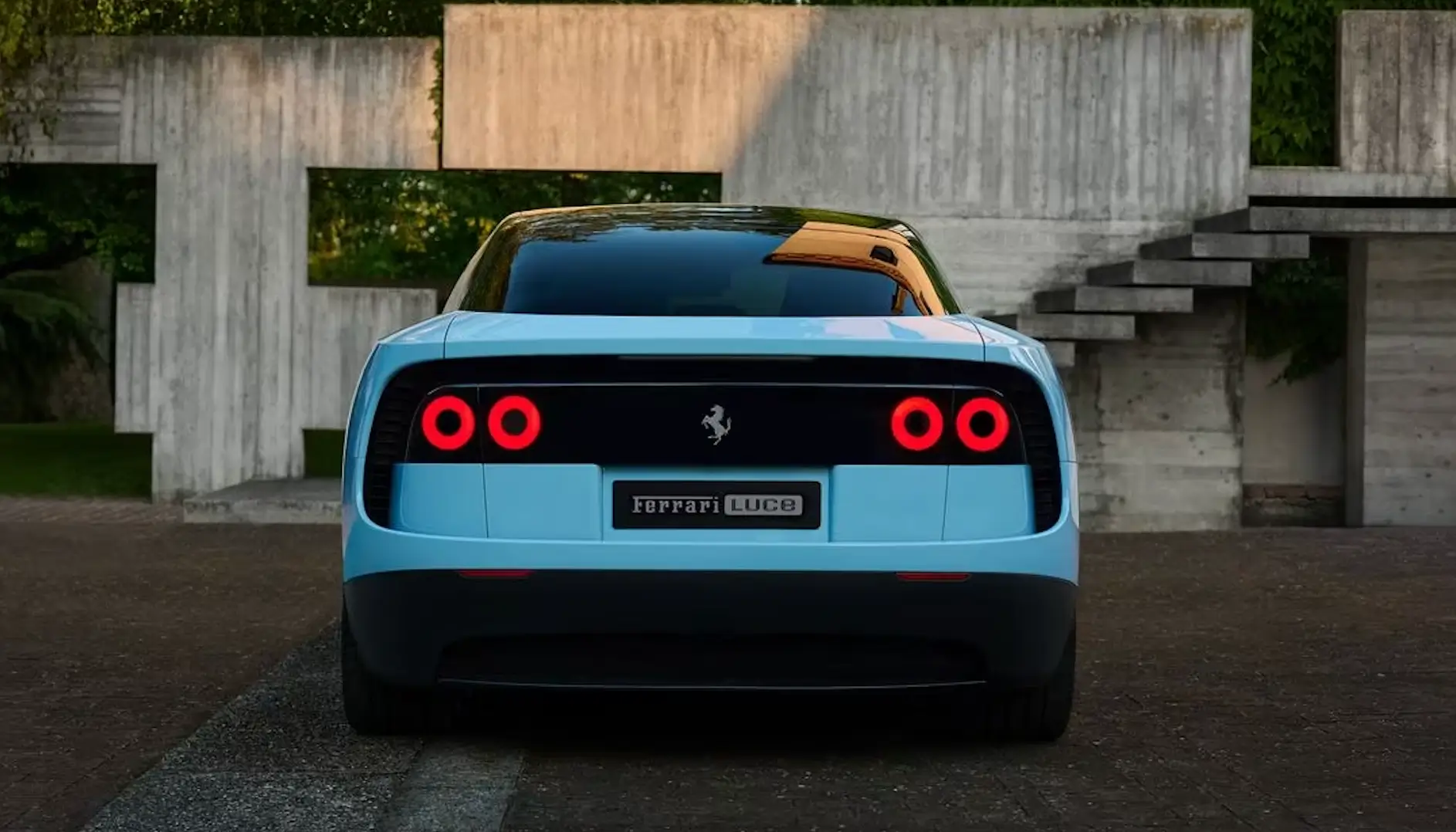
For this new audience, the roaring, romantic internal combustion engine does not necessarily represent value or necessity; in fact, it means the exact opposite. It is no coincidence that in the most widely circulated images of the Ferrari Luce, the new model is presented in a livery called Azzurro La Plata—a color historically linked to Enzo Ferrari, but also deeply connected to the world of overseas Ferrari racing.
Ferrari is winking at a young, digital-native entrepreneurial audience by presenting the Luce in the color palette of social platforms, UI/UX, and the tech world in general. Ferrari does not want to turn the Luce model into the car of the future, but rather, the car of the present.
Fanbase, public, customer: the distinction missing from many analyses
To correctly interpret the launch of the Luce, one must keep three categories separate that are often confused and blended together.
The fanbase is made up of those who love Ferrari, know its history, defend the myth, and react strongly when they perceive a violation of the emotional contract established with the brand.
The public consists of those who entered the conversation because the topic became mainstream: they watch the memes, read the headlines, have an aesthetic opinion, and, in the media frenzy, decide to jump into the stream of online reactions.
The customer, on the other hand, is someone who can actually purchase a Luce, and they almost certainly do not overlap with the first two groups.
In marketing, a negative reaction from those who are not the target is not necessarily considered a failure; on the contrary, it can be a useful signal to understand that the communication is reaching an audience different from the traditional one. Ferrari is attempting to speak to a different audience than the one it has built over nearly a century of history, opening a side door into the Ferrari hypercar market, fully aware of the controversy this choice has caused.
Does it make sense to be outraged?
In part, yes.
The uncomfortable truth we draw from this story is that a brand we feel emotionally connected to can stop fueling our imagination without necessarily asking for our permission.
Through its cars, which many consider true works of art, Ferrari represents much more than a company: it is art on wheels, a dream, Sunday on the couch watching Formula 1, and that paradox where a person, even knowing they will likely never be able to afford a Prancing Horse car, cannot help but turn their head every time they hear that sudden, unmistakable roar on the street.
Yet, today, there is a bitter feeling that the Ferrari brand, like other brands before it, has stopped catering to the audience that brought its myth to life in an attempt to seduce a new type of potential customer.
Not everything a brand produces is intended for those who loved it first, and while some products protect the past, others are designed to fund the future. The Luce seems to belong to this second category: not a Ferrari for those who want to confirm their own idea of Ferrari, but a Ferrari for those who want to access the brand through a different code.


