
Do you keep hearing about brand awareness but feel like you haven't quite grasped what it means?
If so, you're in the right place.
Some marketers might try to pull the wool over your eyes or use convoluted terms (useful, sure, but convoluted) to confuse you into buying something. We try the opposite: we explain everything, and then, if you like, you can put us to the test. Not bad, right?
Let's start from the beginning. When a person or a company needs to choose a supplier to spend their hard-earned money on, their mind never starts from a blank slate. It always starts from a shortlist of names they already know and have memorized over time through dozens of casual exposures: a TV ad (if they still watch TV), an article (like this one! We hope you remember Black Rabbit), a colleague's recommendation, a post seen distractedly while scrolling through their phone... and so on. Those who aren't on that list simply aren't considered in the first round and start at a disadvantage. Not because they are worse, but because they didn't position themselves in their audience's mind beforehand.
Brand awareness is exactly this: the probability that your brand is part of that list. In this article/guide, we will look at exactly what it means, how it is structured across different levels of depth, how to measure it without relying on gut feelings, and which strategies and tools can help you increase your company's awareness.
What brand awareness means
Brand awareness is the degree of familiarity an audience has with a specific brand: how much they recognize it when they encounter it, and how much they spontaneously recall it when asked to think of a product category. The more direct this is, the stronger the brand awareness: sometimes the phenomenon comes full circle, and certain product categories take on the name of the specific product because its positioning in the consumers' minds has become so strong.
Some examples include: Jeep (for those who don't know cars, every off-roader is a Jeep), Fischer (the wall plugs you use after drilling. Seriously, does anyone outside the trade actually call them wall plugs?), Scotch for adhesive tape, and finally the best of all: "Coke" to mean a generic cola, or even a Pepsi. Other equally familiar cases are all those moments when you use a brand to better express a concept (you've surely said "driving a Ferrari" at least once to mean someone has made money).
The concept was formalized by David Aaker as one of the fundamental components of brand equity, the value a brand adds to a product beyond its functional characteristics.
It is worth distinguishing it from two related terms that tend to overlap in everyday language. Brand awareness answers the question "does the audience know me?", brand image answers "what idea have they formed of me?", and brand equity answers "what is the commercial value of all this?". These are three distinct but sequential levels: without awareness, no perception is formed, and without perception, there is no brand value to capitalize on. This is why working on the image of a brand that no one knows is, first and foremost, a matter of prioritizing correctly.

From recognition to top of mind
Awareness doesn't work like an on/off switch (people in general don't work like that. Shocking, right?) but like a progressive scale, which the classic model represents as a four-level pyramid.
At the base lies the starting point for every new brand: the audience doesn't know it exists. Just above that is aided awareness (or "prompted recall" if you want to be formal), which is the recognition triggered when someone sees your name, logo, or packaging and links it to the right category. It's a passive memory—enough to guide a choice when standing before a shelf or browsing a search results page, but unable to generate demand on its own. Put simply, you've made your brand familiar enough to be associated with the right category, but not enough for consumers to think of you before they even start shopping.
The real leap happens with brand recall, or spontaneous awareness: people name you without any prompting. If someone is asked "What running shoe brands do you know?" and your name makes the list, you've officially entered the playing field. At the very top sits top of mind—being the first name mentioned—a position that, in most markets, directly correlates with market share leadership (with complex exceptions like Tupperware).
Understanding which step you are on today is more useful than abstractly deciding how much awareness you want. The activities that take an unknown brand to recognition are different from those that turn a recognized brand into a remembered one.
Why brand awareness impacts the numbers
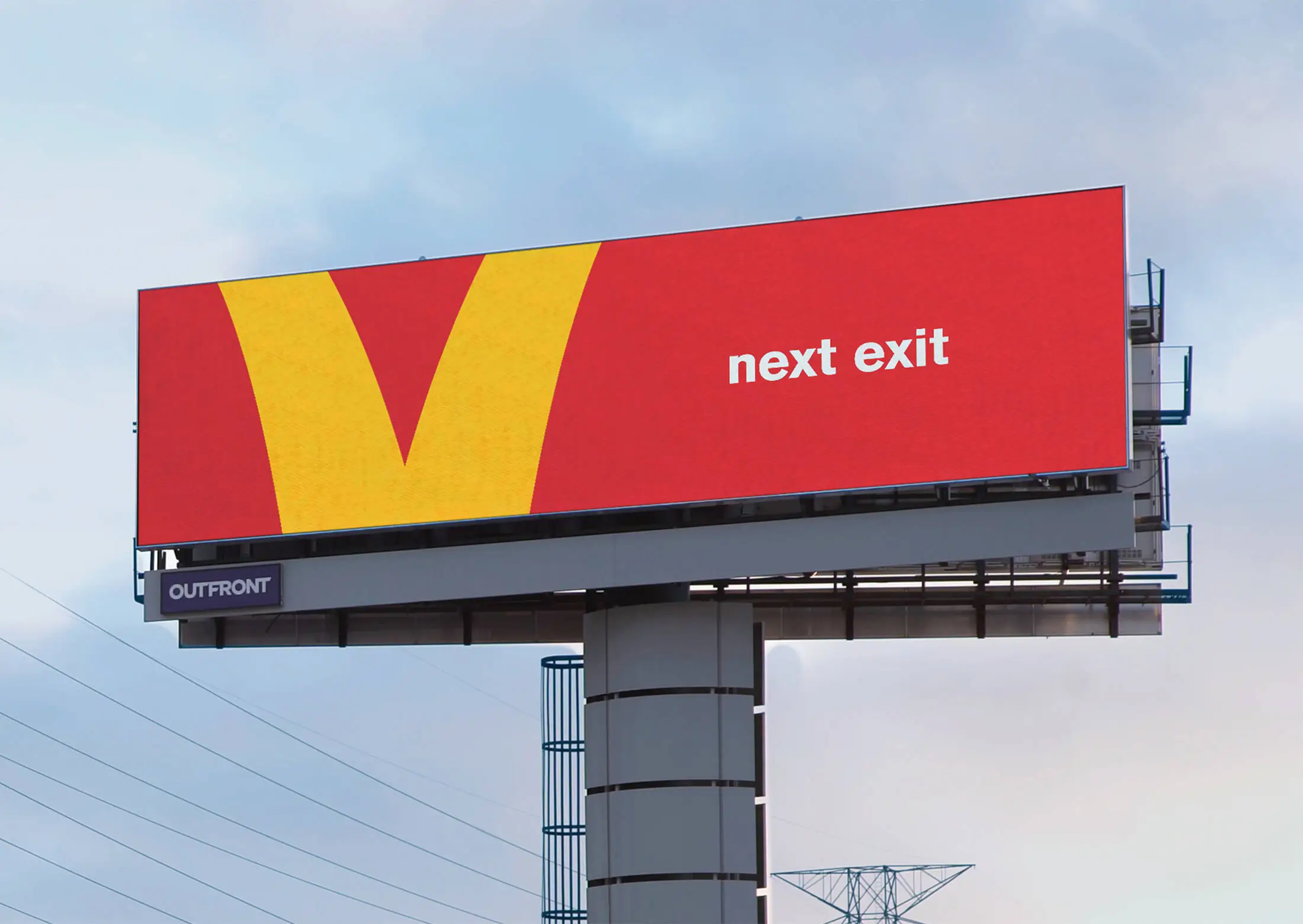
The most common objection is that branding is a vague investment, hard to justify in a marketing plan where every dollar must be accounted for—especially for SMEs with smaller teams and tighter budgets than the industry giants. In reality, brand awareness delivers very tangible effects on the bottom line, even if they're indirect.
The first is the reduction of acquisition costs. With the same advertising spend, an audience that knows you (assuming your products don't suck, of course) clicks more and converts better: the same performance campaign performs significantly better when it runs on a familiar brand because part of the persuasive work has already been done elsewhere. The second effect is the generation of direct demand: branded searches on Google and direct traffic are among the channels with the best return ever, because they intercept people who are already looking for you instead of having to convince them from scratch.
Then there is an effect on price. A recognized brand can afford a premium price because awareness acts as a signal of reliability and reduces the risk perceived by the buyer. This is a mechanism particularly evident in B2B, where choosing an unknown supplier exposes the decision-maker to personal and reputational risk (especially if you are a manager and the money belongs to a company that isn't yours, you will tend not to take risks and spend a little more to have the "guarantee" of a job well done). Finally, awareness is a form of protection: well-known brands handle crises, price increases, and the entry of new competitors better because they have accumulated a margin of trust to draw upon.
How to measure something seemingly intangible
The historical limitation of branding has always been measurement, but today there are enough proxy indicators to build a reliable picture, provided you cross-reference them instead of relying on just one.
The most accessible starting point is the search volume for your name on Google: how many people type in your brand is the most direct signal of spontaneous demand there is, and Search Console plus Google Trends are all you need to track it over time. From there, you get to share of search—your brand's share of total branded searches within your industry. It's a metric that has the distinct advantage of predicting market share shifts a few months in advance. Alongside this, you look at direct and branded organic traffic, unique reach from content and campaigns, online mentions, and share of voice relative to competitors.
When a more solid reading is needed, we move on to actual research: questionnaires on representative samples that detect aided and unaided awareness, or the brand lift studies offered by Google and Meta, which compare ad recall between those exposed to a campaign and a control group. These are more expensive tools, but they are the only ones that measure awareness instead of deducing it.
Whatever set you choose, the rule of thumb is one: set a baseline before you start. And if, as in most cases, you don't have the time and tools to do these measurements, at least now you know that it is technically possible to measure. And if something can be measured, then it also has value and is worth investing in.
Strategies that build awareness
Before choosing channels, it is better to fix the key message. A brand that says the same things as everyone else isn't remembered simply because it doesn't leave a distinguishable trace (this is your cue to remove that "we are a 360-degree company" from your site. Now.).
Clarifying who you are talking to, what problem you solve, and what makes you truly different (truly, truly, not what you would ideally like to be) is the preliminary work that makes everything else productive. On the same level are the distinctive assets that less experienced people (but not you, right? You're sharp if you've read this far) mistake for "THE BRAND": logo, palette, fonts, tone of voice, recurring formats, perhaps a jingle or a mascot... all the elements that make the brand recognizable even before its name is read. They must be defined once and then used with almost obsessive consistency at every touchpoint, because it is repetition, not originality, that builds memory. Remember that your company is perceived as special and interesting from the inside almost always and only in two cases: it's yours and you care a lot about it, or they pay you to be there and you have to pretend to care a lot about it. The sooner you understand that this isn't the default for your customers, the better your business will go.
Let's get serious again: in terms of visibility, SEO and content marketing remain the most efficient way to get known by those who aren't looking for you yet: dominating the informational searches in your sector puts you in front of people long before they are ready to buy, and building authority on a specific topic works better than spreading yourself thin across dozens of unrelated subjects. Digital PR works toward the same goal with a different lever: a mention in an authoritative publication is worth much more in terms of awareness than a sponsored post, and the material that gets it is generally proprietary data, original research, and taking a stand on current events. Social media is primarily used for reach, and short video formats remain the ones that generate the most: you don't need to be everywhere, just two channels where your audience is truly present and a consistent, sustainable posting frequency are enough.
Then there are collabs. Collaborations with creators and influencers allow you to reach established audiences by borrowing the credibility of those who built them; co-marketing with non-competing brands that share the same target, joint webinars, co-authored reports, and bundles are all things that work particularly well in B2B. Employee advocacy leverages the fact that content posted by individuals gets more reach than content posted by company pages, multiplying exposure without media costs (that said, if you are a CEO, we strongly advise you not to force your employees to post from their personal LinkedIn profiles if they don't want to. Your job is to get them to participate in company communication spontaneously. You've been warned). Finally, communities, events, and industry podcasts produce slower but deeper awareness because they associate the brand with an experience rather than an impression.
Advertising plays a distinct role in this ecosystem, provided you don't ask it to do the wrong job. Campaigns focused on reach and frequency (video, display, connected TV, audio) are designed to introduce the brand to people who aren't searching for you yet, and they should be evaluated using awareness KPIs: measuring them by ROAS almost always leads to pulling the plug before they've had a chance to work. Finally, everything mentioned above comes with a vital caveat about time: brand awareness builds through accumulation, with results showing up on six- to twelve-month horizons. Changing your identity or core message every few months resets all that hard work back to zero.
Useful tools
For brand demand, Google Search Console, which shows the trend of branded searches, and Google Trends, especially useful for benchmarking against competitors over time, are sufficient; Semrush and Ahrefs add volumes, share of voice, and mention monitoring.
On the analytics side, GA4 covers direct and branded organic traffic, while Looker Studio is used to collect all indicators into a single dashboard that makes trends readable over time: it is a simple but decisive step, because brand awareness is evaluated on historical series and not on isolated snapshots of data every now and then.
Then there is asset management, which is less glamorous (sigh) but has more impact than you might think: a shared brand book and a single space where everyone gets the correct materials (if we are an under-30 team and have already seen too many logos that are screenshots of screenshots of the original version), even just a company Canva or Figma workspace, is what prevents visual consistency from crumbling as the number of people communicating on behalf of the brand grows. In our experience, this last point does the heavy lifting if you can keep it together, and in practice, it's enough to stop everyone who wants to make an exception "just this once" because, in their words, "I really like this holiday post made with ChatGPT free in two minutes! Look how cute." Yeah... no.
Mistakes that undermine your work
The most common mistake is measuring branding with performance KPIs, i.e., expecting immediate conversions from activities whose effect is cumulative and deferred. It would be like buying a new tie and expecting sales to triple from that moment on.
The second is constant rebranding: changing identity too often prevents memory from settling, and almost every restyling starts from a lower point than the one previously reached. The third is aiming for generalist notoriety, when it is almost always more profitable to be top-of-mind for a defined niche than vaguely known to everyone.
There are also two less obvious mistakes. Neglecting brand image while pushing for notoriety exposes you to the worst risk, which is becoming known for the wrong reasons (there are entire online communities that meme about companies' worst communication attempts). And not setting a baseline at the beginning means condemning yourself to not being able to prove anything at the end, with the very frequent practical consequence that at the first budget cut, branding work is the first item to go.
Where to start
A sensible brand awareness plan begins with measuring the current state: brand search volume, share of search, mentions, and possibly a survey if the budget allows. This is followed by defining the audience and positioning (who you want to be known to and for what) and only then choosing two or three priority channels, identified based on where your audience actually is and not where it is most convenient to post. From there, you build an editorial and media plan with a frequency you know you can sustain for at least a year, and you review the indicators every quarter, correcting course without distorting the identity.
Brand awareness, after all, is not a communication goal separate from the business: it is the infrastructure upon which acquisition, margins, and the ability to withstand the blows that every business takes along the way rest. And like all infrastructure, it should be built in advance.
If, after all this, you are still confused and want a hand, give us a call. If you're lucky, a creative will answer instead of one of our salespeople, so you might get some free advice.


